
New MITK Website
The MITK website has been redesigned from the ground up — cleaner, simpler, and focused on getting you to the information you need quickly.
The MITK Workbench is a free, open-source application for medical image visualization, segmentation, registration, and much more.
Or develop with the MITK framework →
Click to enlarge
v2025.12 · Released December 12, 2025
Load and overlay CT, MRI, PET, and other DICOM modalities in a unified workspace.
Render medical images in 2D, 3D, and 4D with interactive slice views and volume rendering.
BSD-licensed and developed openly on GitHub. Free to use, modify, and distribute.
Powerful semi-automatic and interactive segmentation tools for delineating anatomical structures.
Align and register medical images from different time points or modalities using rigid and deformable methods.
Extend the MITK Workbench with custom plugins tailored to your clinical or research workflow.
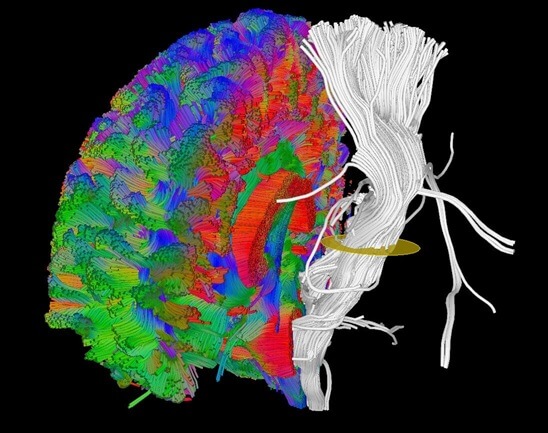
Diffusion-weighted MRI analysis — fiber tractography, connectomics, and microstructure imaging.
Open-source platform for federated learning and medical image processing workflows on Kubernetes.
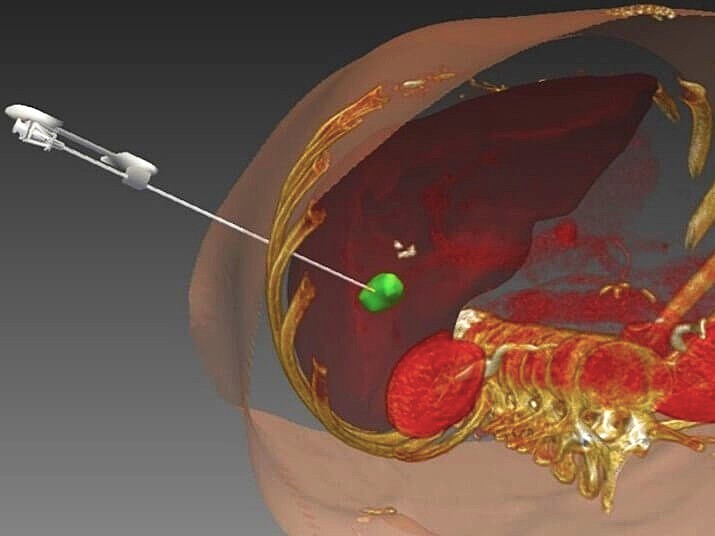
Image-guided therapy tools — tracking device integration, navigation, and intraoperative visualization.
Beyond the Workbench application, MITK is a comprehensive C++ framework for medical image computing. It provides a modular foundation for extending the MITK Workbench with custom plugins or developing your own medical imaging applications and research prototypes.
The MITK website has been redesigned from the ground up — cleaner, simpler, and focused on getting you to the information you need quickly.
MITK v2025.12 brings several refinements to segmentation workflows, including improvements to nnInteractive–based AI segmentation, 3D label visualization, better label suggestions, and usability tweaks that make everyday segmentation work more efficient and comfortable.
With MITK v2025.08, the nnInteractive AI segmentation tool is fully integrated into the Workbench, allowing users to create 3D segmentations from just a few 2D interactions such as points, boxes, or scribbles. The release also adds live label search, improved multi-label segmentation support, and various workflow refinements to make segmentation and navigation smoother and more convenient.